InnoWorks Press
INNOWORKS PRESS · REVIEW EDITION
Computing and systems
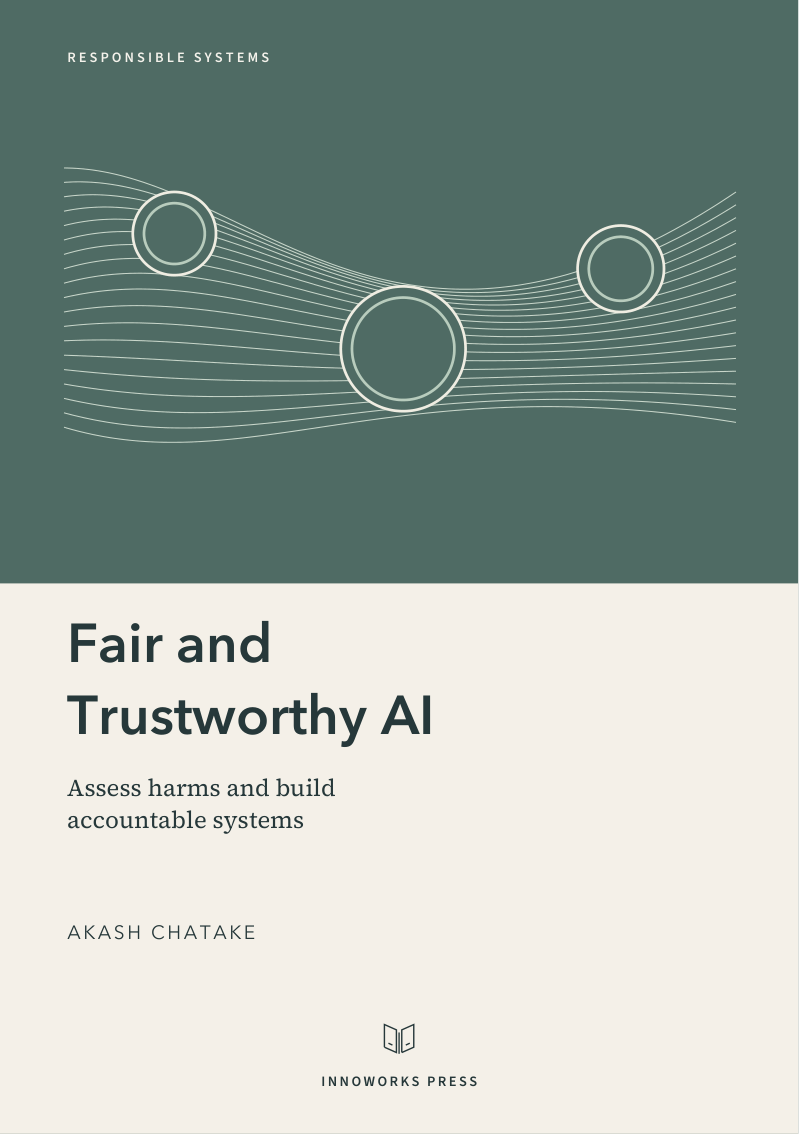
Fair and Trustworthy AI
Assess harms and build accountable systems
An AI score enters a world of people, queues, policies and imperfect records. Assessing it requires more than inspecting a performance table. This book begins with a system and its purpose, then asks how labels, thresholds, disparities, explanations, privacy and human oversight shape what happens next. Worked assessments invite readers to distinguish a measurable technical property from the broader judgement it can support. Generative systems appear within the same lifecycle of evidence and responsibility. The manuscript seeks to make responsible assessment a practical habit of asking specific, answerable questions.
Manuscript and companion under editorial and technical review. This local preview does not announce publication or sale.
Inside the book
A route through the ideas
Who it is for
Advanced students, practitioners and educators examining the social and operational consequences of AI systems.
- Define the system and its purpose
- Map harms across the lifecycle
- Question the data and labels
- Measure disparities responsibly
- Understand mitigation tradeoffs
- Explain systems for real audiences
- Evaluate robustness and security
- Protect privacy
- Make oversight meaningful
- Govern deployment and change
- Extend assessment to generative systems
- Defend a capstone assessment
Chapter titles follow the current review manuscript. Final pagination and edition details remain subject to review.
From the opening chapter
Begin with an idea
Imagine a learner asking for specialist help. A system recommends a referral. The learner waits, the queue is full, and the record eventually says that a recommendation was made. From the model's narrow viewpoint, the task may be complete. From the learner's viewpoint, the important event has not happened. This invented scene marks the boundary between predicting an action and delivering a benefit.
A responsible assessment follows the recommendation into the world. Who can act on it? What happens when no one acts? Can the person discover which record was used and correct a mistake? These are not optional questions added after technical work. They help determine which technical work would be relevant. An accurate prediction of an irrelevant or inaccessible service can be a polished answer to an unhelpful question.
The assessment should also leave room for a less elaborate alternative. A clearer application form, an accessible explanation or a better staffed queue might help without learning a predictive model. Comparing alternatives is a way of taking the purpose seriously, not a failure to be enthusiastic about AI.
Beyond the page
Make the idea work
Read. Predict. Experiment. Explain.
Move between the explanation and a working investigation. Each chapter provides a question, inspectable code or a model, and practice that asks you to explain the result.
- Read the argument before running the calculation.
- Change an input or assumption and inspect the result.
- Explain what the model supports, and what it leaves open.
Chapter QR codes connect the print proof to these materials. The online edition is being prepared locally; public links require a verified release.
The book as an object
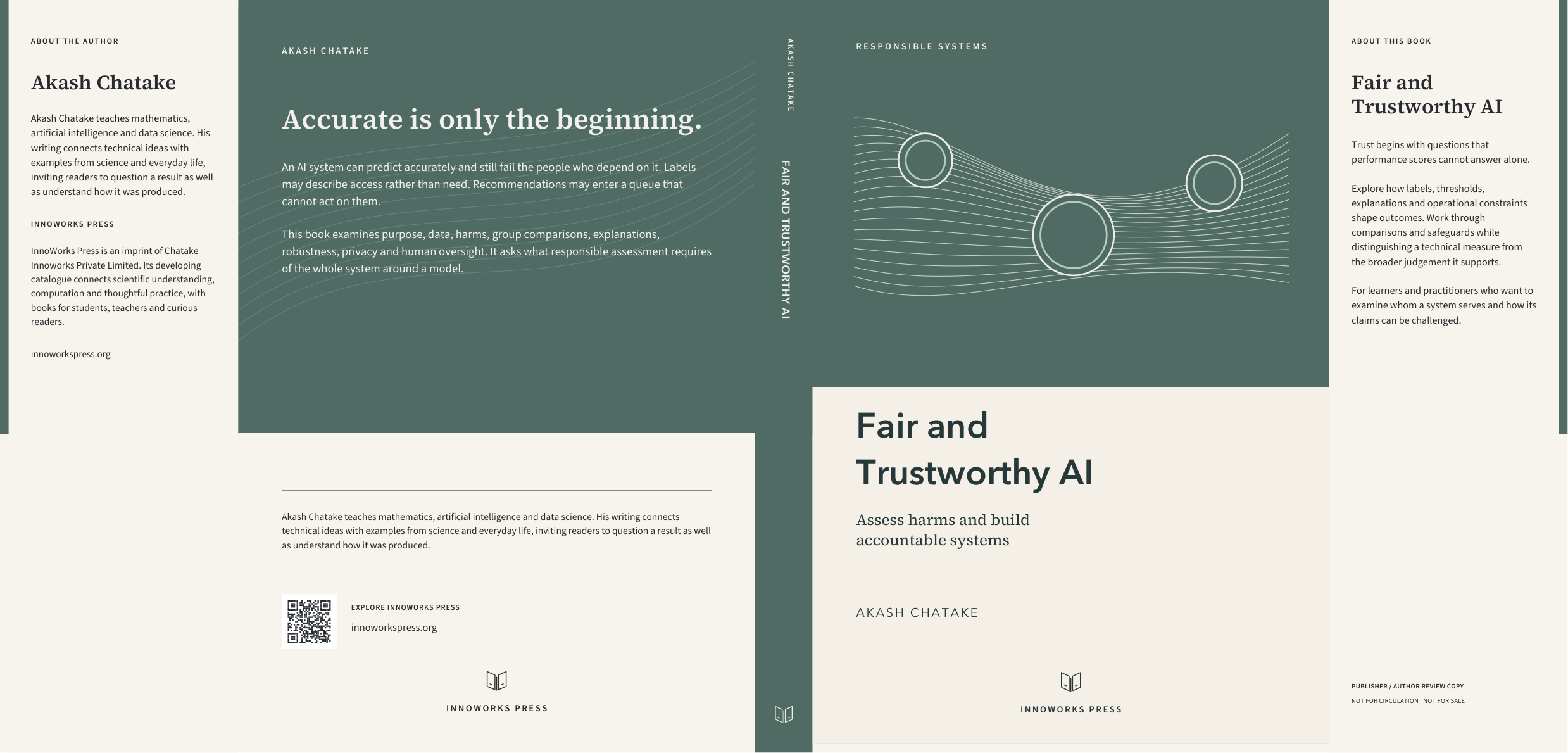
Cover and jacket
Selected artwork · design proofs